For parents and teachers
Chess for kids
A free path from the first move to the first real game: short guides to each piece, mini-games with one piece, small daily games and easy puzzles. Sit next to your child, let them do the clicking, and stop while they still want more.
Try it
Start with a mini-game
One piece, a few pawns and no opponent, so nothing can go wrong. Try the Rook Muncher first, then the others.
The rook moves in straight lines. Eat every pawn in as few moves as you can.
Eat every pawn. Click the rook, then a square.
The path, step by step
Four steps in order. Move on when the step before is easy, not when a set number of sessions has passed.
1.Learn the pieces
Set up the board, then one piece per session: the rook first, the pawns last. Each guide is short and has a board to try the moves on.
- GuideHow to Set Up a Chess BoardWhere every piece starts.
- GuideHow the Rook MovesStraight lines: the easiest first piece.
- GuideHow the Bishop MovesDiagonals, always on one color.
- GuideHow the Queen MovesA rook and a bishop in one.
- GuideHow the King MovesOne step, never into danger.
- GuideHow the Knight MovesThe L-jump that hops over pieces.
- GuideHow the Pawn MovesForward to move, diagonal to capture.
2.Play with one piece
Easy drills with no clock and no opponent. Three misses end a run.
 DrillRook MuncherOne rook, a few pawns: eat them all.
 DrillBishop MuncherThe same game on the diagonals.
 DrillQueen MuncherThe queen eats the board.
 DrillKnight MuncherTwo pawns, one jumping knight.
 DrillKing MazeWalk the king home without being taken.
 DrillFind the SquareA square name pops up: click it.
 DrillBoard SetupPut White's pieces on their squares.
3.First games
Small games with a few pieces, new every day. Most have six levels: start on Very Easy.
4.Check and checkmate
Once the moves are easy, teach check and the three ways out of it, then mate in one. These turn a pile of moves into a game with an end.
By age
Ages are a rough guide: a child who finds a step easy moves on, whatever their age. The full plan, with what to teach in each session, is in our guide to teaching kids chess.
Ages 5–7
Sessions of 10–15 minutes
Meet the pieces one at a time, with a small game for each. No full games yet: a child who can move every piece and set up the board is ready for more, whatever their age.
- DrillRook MuncherThe best first game.
- DrillKing MazeThe king's rule as a maze.
 Daily gamePawn SweepStart on Very Easy.
Ages 8–10
Sessions of 20–30 minutes
From rules to real games: check, mate in one, and not leaving pieces where they can be taken for free. Small boards make the first full games shorter.
 DrillMate RushMate in one, back to back.
 DrillSafe SquareMove the knight where nothing takes it.
 Daily gameSkirmishA full game on a small board.
Ages 11+
Sessions of 30–45 minutes
Older children move fast through the basics. Then it's notation, forks and pins, the basic checkmates, and a short puzzle every day.
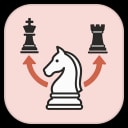 DrillKnight ForkOne jump, two pieces hit.
- GuideChess Endgame PracticeMate with king and queen, then rook.
 Daily gameDaily PuzzleOne puzzle a day from real games.
Chess puzzles for kids
New puzzles every day. Start on Very Easy: most of these need the moves of only one or two pieces.
- Daily gamePawn SweepOne piece, a field of pawns, and every move must take one. Very Easy is a small 5×5 board with a rook or queen, and no pawn is defended.
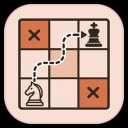 Daily gameChess MazesWalk your piece to the flag without landing where Black could take it. Five mazes a day: start with Exit.
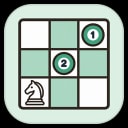 Daily gameKnight SnookerPot the numbered balls in order with a knight. Very Easy is a 6×6 board with three balls.
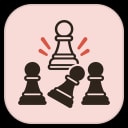 Daily gameBreakthroughOne piece against a wall of pawns. Very Easy is a queen against two or three pawns on a 6×6 board.
 Daily gameMate in NFind the checkmate. Very Easy is always a mate in one.
- Daily gameDaily PuzzleFind the best move in a position from a real game. Very Easy is the easiest of six levels.
For parents and teachers
- How to teach kids chess: a plan in three stages by age, with what to teach first and how to handle winning and losing.
- How to start a school chess club: a printable checklist, a plan for the first five sessions, and ladders and mini tournaments.
- Printable chess board and pieces: a board on one sheet and cut-out pieces, for a class short of sets.
Frequently asked questions
- What age can kids start learning chess?
- Most children can start at 5 or 6, once they can sit for ten minutes and follow a rule with two parts. Some 4-year-olds enjoy setting up the board and the one-piece games; others are happier starting at 7. Interest matters more than age.
- What should a child learn first?
- How to set up the board, then one piece at a time: the rook first, then the bishop, queen, king and knight, and the pawns last because they have the most special rules. Play a small game with each piece before moving on, and keep full games for later.
- Is it free? Does my child need an account?
- Everything on this page is free, and nothing needs an account. Without one, progress is kept for the browser your child plays in.
- Are there chess puzzles for kids?
- Yes. Start the daily games on Very Easy: Pawn Sweep and Knight Snooker need only the moves of one piece, Breakthrough is a queen against a few pawns, and Mate in N on Very Easy is always a mate in one. In Chess Mazes, start with the Exit maze: reach the flag without being taken.
- How long should a chess session be for a child?
- About 10–15 minutes for ages 5–7, 20–30 for ages 8–10 and 30–45 for older children. Stop while they still want more, and play rather than explain.
- Can my child play against the computer?
- Yes. Pawn Wars and Skirmish are small games against a bot, six a day, and the bot is weakest on Very Easy. For full games, the play page has human-like bots from 600 up.
- Is there help for teachers and chess clubs?
- Yes. Our guide to starting a school chess club has a printable checklist and a plan for the first five sessions, and you can print a board and pieces on paper when you are short of sets.